Brass is the cheapest, densest, easiest way to make an SCX24 crawl better. It's also the place beginners overspend the most. The rule is simple: weight low and forward, and stop when the truck feels planted. This article explains why brass works, where to put it, and where it actively hurts you.
What ballast actually does
A crawler doesn't grip by tire compound alone. It grips by normal force on the contact patch. Add a gram at a tire and you add traction at that tire, within the limits of the tire compound and the surface. Three physical effects:
- More mass at the contact patch means more grip. Normal force times coefficient of friction equals traction. Brass on the axle, knuckle, or hub puts mass exactly where rubber meets rock.
- Lower center of gravity. Weight on the axle sits below the truck's CG. The truck tips later on side slopes and crawls more planted.
- More predictable rebound. A heavier truck settles between bumps instead of pogoing off them. The suspension can actually compress and rebound on stock-soft springs.
The phrase you'll see repeated in the community: “unsprung weight is good weight.” Mass between the springs and the ground (knuckles, hubs, axles, wheels) helps both grip and stability without lifting the body's CG.
Why stock SCX24 needs ballast
The stock SCX24 weighs around 350g. Most of that mass sits high (battery, ESC, receiver, body). The axles, knuckles, and hubs are plastic, which means almost no mass at the contact patch where you want it most. Result: the truck tips on side hills, slides on smooth rock, and gets light up front on steep climbs.
Adding 40 to 80g of brass at the right places fixes most of this. More than 80g and you start running into the limits of the stock motor and servo. The sweet spot is narrower than people realize.
Where to put brass, in order
- Brass wheel weights or brass beadlock wheels. Start here. Around $12 to $35 a pair. Weight on the rotating mass is the lowest possible CG and the most direct improvement in grip.
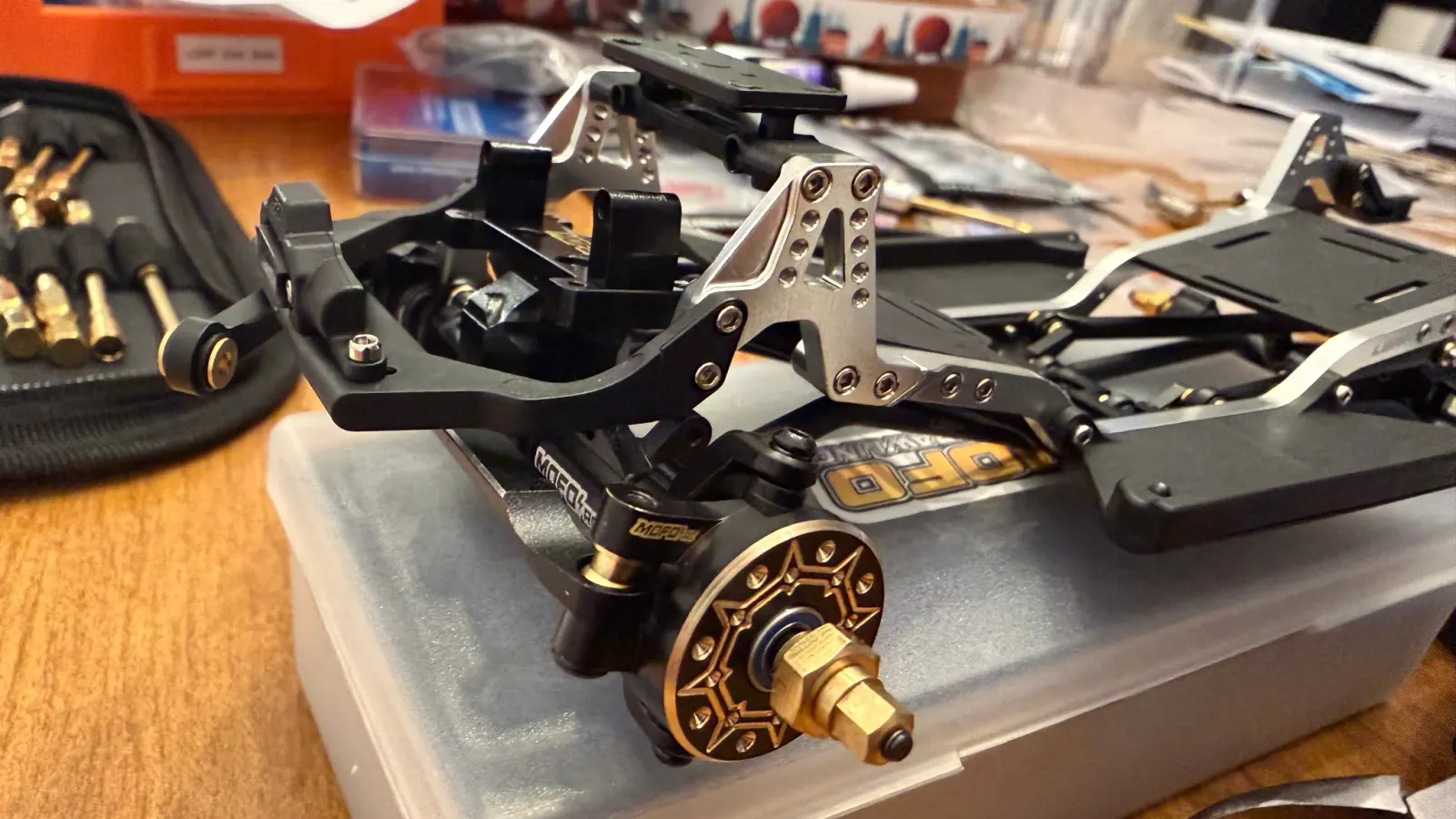
- Brass knuckle weights. $14 to $30 for a set of four. Adds weight at the front axle, where you want it for climbing. Reassess after this. The truck will feel like a different rig.
- Brass front diff cover. $12 to $25. Bolts to the front pumpkin. Cheap and effective.
- Brass skid plate. $12 to $18. More low-down weight. Good for stability.
- Brass rear diff cover. Optional. I usually skip this one and concentrate weight forward.
Each step adds 10 to 30g. By the time you've done the first three, you're around 50 to 70g of brass. That's where I stop on most builds and reassess.
Where not to put brass
- Body panels or shock towers. High up. Raises the CG. Hurts you on side hills. Buys you nothing.
- Motor mounts. The motor mount is already at chassis level. Weight here doesn't buy contact-patch grip or CG drop.
- Top of the chassis rails. Same problem. High up. Wrong direction.
- Replacing aluminum chassis components with brass when you didn't need extra weight there. Marketing wants you to buy brass everything. The truck doesn't want brass everywhere.
What too much brass costs you
- Servo wear. The stock servo can barely turn an unweighted front end. Pile brass on top and the servo strains harder, runs hotter, strips gears faster. Upgrade the servo before you add brass, not after.
- Motor wear. The stock 88T brushed motor was sized for stock weight. Add 100g of brass plus larger tires and the motor runs warmer, draws more current, and dies sooner.
- Drivetrain stress. Heavier truck means more torque demand from the same gears. Stock plastic axle gears strip faster.
- Battery sag. Heavier load means more current draw, which sags the stock 350mAh pack faster.
- Slower top speed. Real, but usually irrelevant on a crawler.
A common pattern: builder buys $200 of brass, then complains the truck won't steer and runs hot. The brass was the wrong upgrade in the wrong order. Servo and tires come first.
Brass vs. aluminum knuckles
Aftermarket aluminum knuckles weigh less than the stock plastic ones. If you buy aluminum knuckles thinking you're upgrading, you've actually downgraded the truck on every metric except looks. Brass knuckles weigh roughly 12 to 18g each (vs. stock plastic at 4g). That's the upgrade.
Aluminum knuckles are the right choice on heavy comp builds where every gram of rotating mass costs something and the builder has compensated for the weight loss with brass elsewhere. For a normal build, buy brass.
My picks
- Brass wheel weights: Samix SCX24-4078 (9g a pair, around $12). Or upgrade to brass beadlock wheels (Samix, INJORA, LGRP) for 24g per wheel of rotating mass.
- Brass knuckle weights: Axial OEM AXI302004 (28.8g per set of 4, around $14) for the budget option. LGRP Mid-Weight Brass Knuckles (around $25, ~12g per pair) for the upgrade. Mofo RC Heavy Knuckles (~14g/set, $30+) for premium.
- Brass diff covers: INJORA front brass diff cover (around $12).
- Brass skid plate: INJORA brass skid (15g, around $14).
How much brass total
Target: 40 to 80g of added brass on a stock-class SCX24. More than 80g and you're in upgrade-the-servo-or-motor territory.
- 40g added (wheel weights + knuckle weights): noticeable improvement in climbing and stability.
- 60g added (+ diff cover): meaningful change in character. Truck crawls planted.
- 80g added (+ skid plate or brass wheels): approaching the limit of stock motor and servo. Consider upgrading drivetrain.
- 100g+: you've outgrown the stock electronics. Time for brushless and a stronger servo.
Where brass sits in the overall plan: see the staged upgrade path. Brass is Stage 3, not Stage 1. Servo and tires first.